Climate Progress or Energy Affordability? Choose Both.
October 13, 2026
By Maggie Super Church
The notion that we can have either climate progress or utility savings – but not both – is a false choice.
The Massachusetts Community Climate Bank (MCCB) team sees every day that we absolutely can achieve climate progress and promote energy affordability at the same time – in fact, we need both climate progress and affordability, for today and for our future.
We know that the effects of climate change are detrimental to our health and to our communities. We know that our state’s housing stock is older than the homes in most of the rest of the United States (two-thirds of the homes in Massachusetts were built before the moon landing). The age of our homes, and our overreliance on oil and gas heating, cause Massachusetts residents to face disproportionately high home heating and cooling bills.
We also know that when we invest in climate friendly home improvement solutions in Massachusetts, we unlock real and lasting energy affordability.
Through our Energy Saver Home Loan Program, the MCCB and MassHousing are connecting low- and moderate-income homeowners across Massachusetts with practical solutions that make Massachusetts homes healthier and more comfortable to live in, more efficient to heat and cool, and less reliant on dirty fossil fuels, all while delivering real utility savings.
That’s not just rhetoric. Real utility bills from MCCB customers show that common-sense climate-friendly home improvements are unlocking substantial energy and utility bill savings.
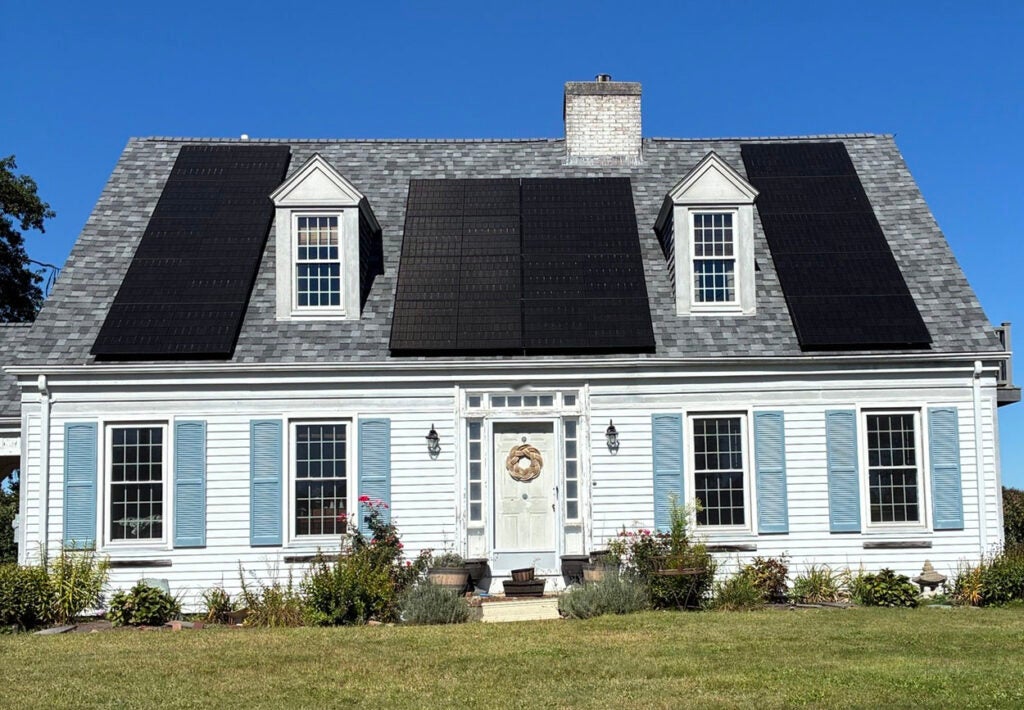
A Franklin County resident turned to the Climate Bank to retrofit their 1960s ranch style home last year. A low-cost Energy Saver loan allowed this resident to install a high efficiency heat pump and rooftop solar panels. Prior to these improvements, the home was heated with electric resistance heat and cooled with window air conditioning units. The work financed by the Climate Bank has made this home much more efficient to operate, resulting in an estimated net energy reduction of 80 percent.
The combination of an electric heat pump system with rooftop solar results in sustainable and long-term energy savings. Low-cost financing from the MCCB allows homeowners to realize the benefits of these immediate savings while spreading the cost of their home improvements over a 20-year period.
According to data from Heatmap and MIT, the average Massachusetts residential electric bill topped $230 in August. That’s up 36 percent over the past five years, with electric bills spiking in the summertime due to demand from inefficient window air conditioning systems. Last year, running window AC units, summer-season electric bills for this Franklin County home topped $1,300.
This past summer, rooftop solar generation allowed this household to bank a negative balance of bill credits, while cooling the home all summer long.
We expect that the winter heating season will see similarly dramatic changes to the bills at this Franklin County home, since this customer’s new heat pump system is two- to three-times more efficient than the home’s old electric baseboard heating.
When connected to clean energy sources like rooftop solar, efficient heat pump systems are not subject to the kind of price shocks we are seeing for fossil fuel heating in Massachusetts. Winter heat pump electric rates improve the value proposition even more.
Compare the real utility savings seen by the MCCB’s Franklin County customer with the status quo. Federal data show that residential natural gas costs in Massachusetts have risen 98% over the past decade. Home heating oil prices have soared even more – up 117% over the past 10 years, and a whopping 72% year-over-year, even before cold weather demand has arrived.
Rapidly rising energy prices are a main driver of the overall economic strain consumers are feeling right now: The sticky-price consumer price index, which excludes food and energy costs, has only climbed 20% in the past decade.
Fossil fuel energy costs in Massachusetts are rising five to six times more quickly than other everyday consumer costs. That is not affordable.
Our Franklin County customer is showing a different way forward. They have achieved substantial energy and utility bill savings by partnering with Mass Save on insulation and weatherization, then investing in heating and cooling electrification and rooftop solar. Low-cost financing from the MCCB makes this work attainable.
The Climate Bank helps Massachusetts consumers make home improvements that reduce their energy consumption and advance the Commonwealth’s sustainability goals. This Franklin County home shows what that looks like: An 80% net energy reduction and five tons of CO2 emissions saved every year.
As we work to build a more sustainable Massachusetts, we can also help low- and middle-income residents who are struggling with rising fossil fuel costs. Climate finance can be both an environmental solution and an energy affordability solution. It’s the difference between a $1,300 summertime cooling bill and negative utility bills all summer long.
Maggie Super Church is Director of Policies and Programs for the Massachusetts Community Climate Bank at MassHousing.